


Improve Patient Experience Online: Kansas Medical Guide
Improving the patient experience online for Kansas medical practices involves creating a seamless digital journey that includes fast mobile-responsive design, accessible web content, integrated online booking, and high-visibility local SEO. By prioritizing user-centric technology, practices can increase patient trust, reduce administrative burdens, and improve health outcomes through better communication.
Why is the online patient experience important for Kansas doctors?
In today’s healthcare landscape, the patient journey doesn't start in the waiting room; it begins with a Google search. Whether you are a specialist in Wichita or a general practitioner in Overland Park, your digital presence is your new front door. Patients are no longer just looking for the best doctor; they are looking for the best experience . This includes how easily they can find your information, how quickly your site loads, and how simple it is to interact with your staff through digital channels.
When a medical practice neglects its online experience, it risks more than just a low search ranking. It risks losing the trust of potential patients who equate a clunky, outdated website with clunky, outdated medical care. Conversely, a modern, streamlined digital interface signals professionalism and a commitment to patient-centered care. For Kansas practices aiming to grow, the online experience is the foundation of patient acquisition and retention.
How does mobile-responsive design impact patient trust?
A significant majority of patients now use smartphones to research symptoms, check reviews, and find local clinics. If your website is not optimized for mobile, you are effectively turning away a huge portion of the Kansas population. Mobile-responsive design ensures that your site adjusts automatically to fit any screen size, providing a consistent and frustration-free experience.
Key benefits of mobile optimization include:
- Faster Load Times : Mobile users are often on the go and have little patience for slow-loading pages.
- Click-to-Call Functionality : Mobile sites allow patients to call your office with a single tap.
- Improved Navigation : Touch-friendly buttons and simplified menus make finding information easier.
- Lower Bounce Rates : Search engines reward sites that keep users engaged.
- Higher Search Rankings : Google uses mobile-first indexing to determine search results.
At Arluna Digital, we specialize in web design and development that prioritizes the mobile user. We understand that for a medical practice, every second a page takes to load could be the difference between a new appointment and a lost lead. A mobile-first approach is not just a trend; it is a necessity for modern healthcare marketing.
Implementing Streamlined Online Appointment Booking
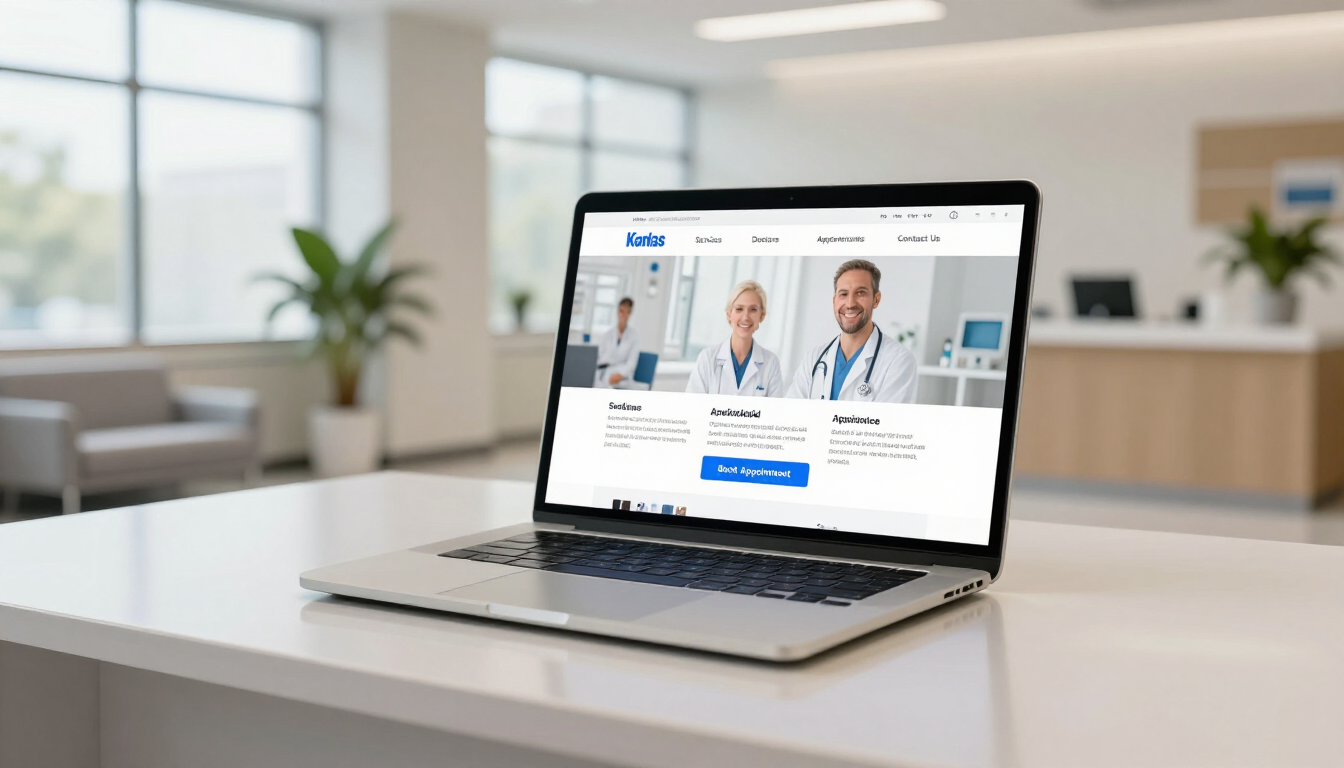
One of the most requested features from modern patients is the ability to book appointments online. In a world where we can order groceries and book flights in seconds, waiting on hold to speak with a receptionist can feel like an unnecessary hurdle. Implementing an integrated booking system can significantly enhance the patient experience while simultaneously freeing up your front-desk staff to handle more complex tasks.
When selecting a booking tool, Kansas medical practices should look for systems that offer real-time availability and sync directly with their Practice Management Software (PMS). This prevents double bookings and ensures that the data patients provide is accurately reflected in their medical records. Furthermore, automated appointment reminders sent via SMS or email can reduce no-show rates, which is a common pain point for busy clinics.
Why is web accessibility crucial for healthcare compliance?
Web accessibility is not just a best practice; in the healthcare sector, it is often a legal requirement. The Americans with Disabilities Act (ADA) and Section 504 of the Rehabilitation Act mandate that healthcare providers make their digital services accessible to individuals with disabilities. This includes people with visual impairments, hearing loss, or motor difficulties.
To ensure your Kansas medical practice is compliant, your website should adhere to the Web Content Accessibility Guidelines (WCAG). This involves:
- Screen Reader Compatibility : Ensuring images have descriptive alt text and headings are structured correctly.
- Keyboard Navigation : Allowing users to navigate the site without a mouse.
- Color Contrast : Using high-contrast colors to help those with low vision read text.
- Video Captions : Providing transcripts or captions for all video content.
- Accessible Forms : Ensuring that input fields are clearly labeled for those using assistive technology.
By focusing on accessibility, you are not only avoiding potential legal issues but also ensuring that all Kansans, regardless of their physical abilities, can access the care they need. Our team provides comprehensive digital marketing services that include technical audits to ensure your site meets these essential standards.
Boosting Visibility with Local SEO for Kansas Medical Practices
Search Engine Optimization (SEO) is the engine that drives patients to your website. However, for medical practices, broad SEO isn't enough; you need localized strategies. Local SEO ensures that when someone in Topeka searches for "pediatrician near me," your practice appears at the top of the results. This involves optimizing your Google Business Profile, managing local citations, and building a reputation through patient reviews.
SEO services for medical practices focus on high-intent keywords that patients actually use. Instead of targeting generic terms, we focus on specific treatments, symptoms, and geographic locations. This hyper-local approach ensures that the traffic coming to your site consists of qualified leads—people in your immediate area who are ready to book an appointment.
What role does content marketing play in patient education?
Content is the bridge between a search query and a patient’s trust. By producing high-quality, educational content, your Kansas medical practice can position itself as an authority in the field. This can take the form of blog posts, white papers, or FAQ sections that address common patient concerns. For example, a dermatology clinic in Lawrence might write about "How to Protect Your Skin During Kansas Summers."
Educational content serves multiple purposes:
- Establishes Authority : Shows you are an expert in your medical specialty.
- Builds Trust : Provides value before the patient even walks through the door.
- Improves SEO : Fresh, relevant content tells Google your site is active and authoritative.
- Answers Questions : Reduces the number of repetitive calls to your office.
- Encourages Sharing : High-value content is more likely to be shared on social media.
Effective content marketing is about more than just writing; it's about strategy. It’s about understanding what your patients are searching for and providing the most comprehensive, easy-to-understand answer available. This aligns perfectly with Answer Engine Optimization (AEO), ensuring your practice is the one AI assistants like Siri or Gemini quote when a patient asks a medical question.
Measuring Success in Digital Patient Engagement
To truly improve the online patient experience, you must be able to measure what is working and what isn't. At Arluna Digital, we believe in radical transparency, providing our clients with data-driven insights rather than vague promises. By tracking key performance indicators (KPIs), you can refine your digital strategy to maximize patient satisfaction and practice growth.
Essential metrics to track include:
- Conversion Rate : The percentage of website visitors who book an appointment.
- Page Load Speed : Ensuring your technical foundation remains strong.
- Bounce Rate : Identifying pages that might be confusing or irrelevant to users.
- Organic Search Traffic : Measuring the growth of your visibility in Google.
- Review Scores : Monitoring patient feedback on Google and Healthgrades.
By analyzing these metrics, we can identify bottlenecks in the patient journey. For instance, if data shows that many users drop off on the insurance verification page, we can simplify that form to reduce friction. Constant iteration is the key to maintaining a competitive edge in the Kansas healthcare market.
Frequently Asked Questions (FAQ)
How long does it take to see results from medical SEO?
SEO is a long-term strategy. While some technical improvements can lead to quick wins, most Kansas medical practices should expect to see significant growth in organic traffic and patient leads within 4 to 6 months of consistent optimization.
Can online booking work with my current medical software?
In most cases, yes. Most modern Practice Management Systems (PMS) offer APIs or direct integrations with third-party booking tools. We can help you evaluate your current tech stack and find a solution that connects seamlessly with your web design and development project.
Is digital advertising like PPC effective for Kansas clinics?
Absolutely. PPC advertising is an excellent way to generate immediate traffic while your long-term SEO strategy builds momentum. It is particularly effective for promoting specific services, such as flu shots, new patient specials, or surgical procedures.
What are the most important local SEO factors for doctors?
The most critical factors include an optimized Google Business Profile, consistent Name, Address, and Phone number (NAP) data across the web, and a steady stream of positive patient reviews. Geography plays a huge role in medical searches, so local relevance is paramount.
How often should we update our medical blog?
Consistency is more important than frequency. Aiming for one high-quality, well-researched article per month is better than posting low-quality content weekly. Focus on topics that solve problems or answer common patient questions to improve your AEO standing.
Summary of Key Takeaways
Improving the online patient experience is a multi-faceted endeavor that requires a blend of technical expertise, empathetic design, and strategic marketing. For Kansas medical practices, the goal is to make healthcare as accessible and intuitive as any other modern service. By focusing on the digital front door, you create a lasting impression that drives growth and fosters long-term patient loyalty.
- Optimize for Mobile : Ensure your site is fast and easy to use on smartphones.
- Simplify Booking : Implement online scheduling to meet patient expectations and reduce staff workload.
- Prioritize Accessibility : Make your site usable for everyone and stay ADA compliant.
- Master Local SEO : Be the first choice when local patients search for care in Kansas.
- Educate Through Content : Build trust by providing clear, expert answers to patient health queries.
If you're ready to transform your practice’s digital presence and turn your website into a powerful patient acquisition tool, contact us today. At Arluna Digital, we provide the transparency, teamwork, and results-driven strategies you need to win in the digital age.