

Common Web Design Mistakes Kansas Business Owners Make

May 12, 2026

Share this article

Common web design mistakes Kansas business owners make include cluttered layouts, confusing navigation, weak calls-to-action, slow loading speeds, and a lack of mobile optimization. These errors frustrate users and lower search rankings. Fixing them requires a strategic approach to Web Design & Development that prioritizes user intent and technical performance.

Why is your Kansas business website losing customers?

One of the most frequent web design mistakes Kansas business owners make is creating a cluttered layout. When a potential customer lands on your site, they should know exactly what you do and how you can help them within seconds. However, many local businesses fall into the trap of trying to say too much at once. They fill the homepage with excessive text, overlapping images, and multiple competing announcements. This results in "choice paralysis," where the visitor becomes overwhelmed and leaves the site altogether.

In the competitive Kansas market, clarity is your greatest asset. A cluttered website suggests a lack of organization and can diminish the professional image you’ve worked hard to build. Effective design uses white space (or negative space) to give your content room to breathe. This directs the eye to the most important information, such as your core services or a special offer. If your site looks like a digital junk drawer, users will likely turn to a competitor whose site is easier to navigate.

To solve this, focus on a "less is more" philosophy. Evaluate every element on your homepage. If it doesn't directly contribute to the user's journey or solve their immediate problem, it likely doesn't belong there. Simplify your menu, use high-quality imagery sparingly, and ensure your typography is legible across all devices. By cleaning up your layout, you improve the overall user experience and keep visitors engaged longer.

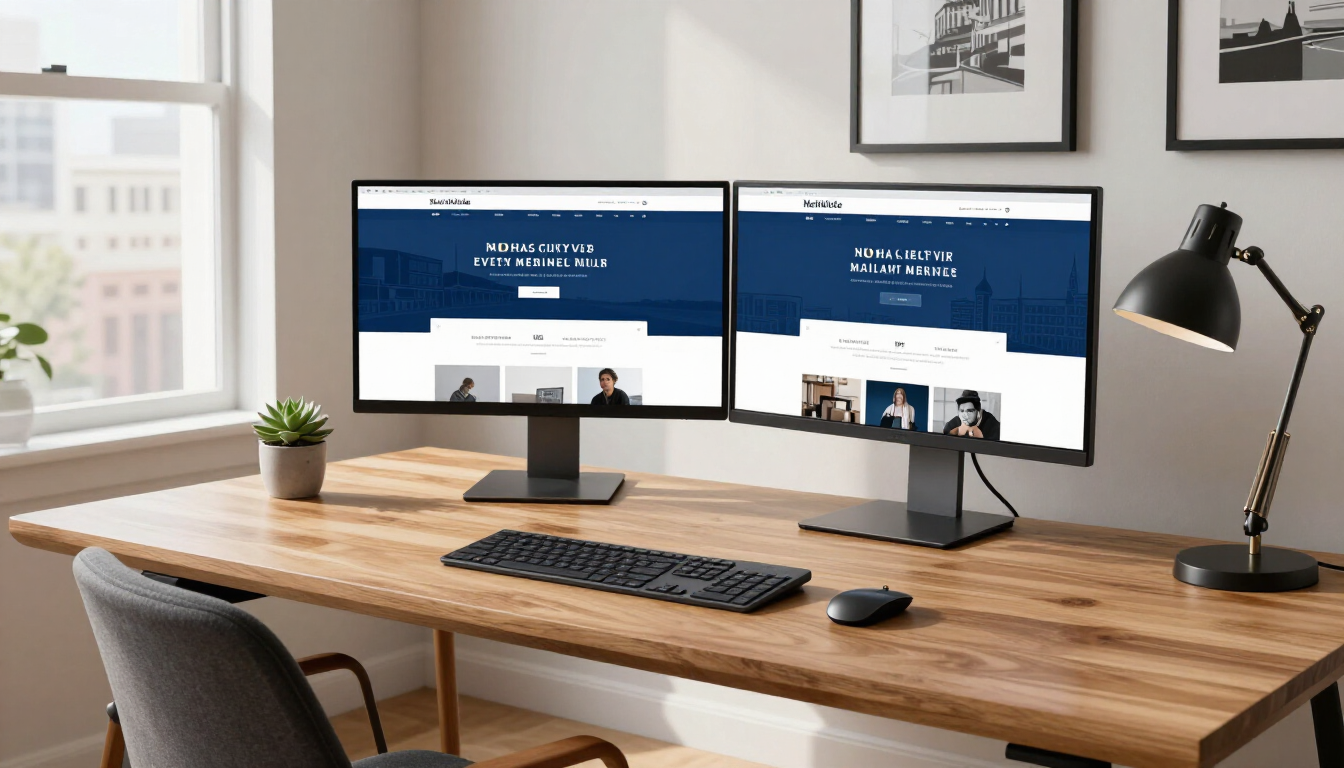
Modern Web Design Workspace

Weak Calls-to-Action (CTAs) hinder conversion

A beautiful website is useless if it doesn't drive action. A common mistake is having weak or invisible calls-to-action (CTAs). Many Kansas business websites assume the customer knows what to do next. They might have a "Contact Us" link buried in the footer or use vague language like "Learn More" that doesn't inspire urgency or provide a clear benefit. Without a strong directive, your visitors will browse and bounce without ever becoming leads.

Your CTA should be the most prominent element on the page. It needs to stand out visually through contrasting colors and be placed strategically where the user’s eye naturally falls. More importantly, the language must be action-oriented. Instead of "Submit," use "Get My Free Quote" or "Schedule Your Consultation Today." This tells the user exactly what will happen when they click.

Consider the following list of high-converting CTA strategies:

  • Use contrasting colors to make buttons pop.
  • Place a primary CTA "above the fold" (visible without scrolling).
  • Use first-person language (e.g., "Start My Trial").
  • Create urgency with words like "Now" or "Limited Time."
  • Ensure the CTA is large enough for mobile users to tap easily.

Effective Branding plays a role here too. Your CTAs should reflect your brand's voice—whether that’s authoritative, friendly, or urgent. When you guide the user through their journey with clear signposts, you significantly increase the chances of converting a casual browser into a loyal client.

Why is mobile-responsive design critical for Kansas businesses?

In today’s digital landscape, more than half of all web traffic comes from mobile devices. Despite this, a significant number of web design mistakes Kansas business owners make involve neglecting the mobile experience. A website that looks great on a desktop but breaks on a smartphone is a major liability. If users have to pinch, zoom, or struggle to click buttons on their phones, they will leave your site within seconds.

Google now uses "mobile-first indexing," meaning it primarily uses the mobile version of your site for ranking and indexing. If your mobile site is poorly designed, your SEO will suffer, making it harder for local customers to find you. Mobile responsiveness isn't just about shrinking the desktop site; it's about reconfiguring the layout to ensure functionality and speed on smaller screens.

Key mobile design considerations include:

  • Large, tappable buttons for easy navigation.
  • Readable font sizes without zooming.
  • Optimized images that load quickly on cellular data.
  • Simplified forms that are easy to fill out on a touchscreen.
  • Elimination of intrusive pop-ups that cover the entire screen.

When your site is fully responsive, you cater to the on-the-go lifestyle of modern consumers. Whether someone is searching for a local service while sitting in a coffee shop in Wichita or commuting in Kansas City, your business will be ready to serve them. Investing in a mobile-responsive design is no longer optional; it is a fundamental requirement for business growth.

How does slow site speed affect your local ranking?

Speed is a critical factor in both user experience and search engine rankings. A slow-loading website is one of the most damaging web design mistakes Kansas business owners make. Research shows that users begin to abandon a site if it takes longer than three seconds to load. In the fast-paced world of digital marketing, every millisecond counts. If your site is bogged down by large unoptimized images, excessive plugins, or poor server response times, you are actively pushing customers toward your competitors.

Search engines like Google prioritize fast websites because they provide a better experience for the user. Site speed is a part of Google’s Core Web Vitals, a set of metrics that measure the health of a website’s user experience. If your site is slow, your visibility in search results will decrease, regardless of how good your content is. This is especially true for local businesses trying to capture "near me" searches, where speed and proximity are paramount.

To improve your site speed, start by optimizing your images. High-resolution photos are great, but they must be compressed for the web. Additionally, minimize the use of heavy scripts and consider using a Content Delivery Network (CDN) to serve your site's files from a location closer to the user. Regular maintenance and updates to your site’s backend can also prevent speed decay over time. A fast site builds trust and keeps users focused on your message rather than their frustration.

SEO Strategy Team

Ignoring SEO during the design phase

Many businesses treat SEO as an afterthought—something to be "added on" once the website is finished. This is a fundamental error. Effective SEO must be baked into the very architecture of your website. From the URL structure to the way images are tagged, every design choice impacts how search engines crawl and index your site. When SEO is ignored during the design phase, you end up with a beautiful site that nobody can find.

Kansas business owners often miss out on local traffic because their sites lack proper header hierarchies (H1, H2, H3), meta descriptions, and alt text for images. Furthermore, a site that isn't structured logically makes it difficult for search engine bots to understand what your business actually does. A well-designed site should have a clear hierarchy, with internal links connecting related pages to help both users and search engines navigate your content.

For instance, if you offer PPC Advertising , that page should be easily accessible from your main services menu and linked internally from relevant blog posts. Proper technical SEO ensures that your site is indexable, while on-page SEO ensures it is relevant to the terms your customers are searching for. By integrating SEO from day one, you build a sustainable foundation for long-term organic growth.

How can you audit your website for these mistakes?

If you suspect your website is suffering from these common issues, the first step is to perform a comprehensive audit. Start by viewing your site as a customer would. Is the contact information easy to find? Does the site load quickly on your phone? If you encounter any friction, your customers likely are too. You can also use free tools like Google PageSpeed Insights to get a technical look at your site’s performance.

Follow this simple checklist for a basic self-audit:

  • Check your site on at least three different mobile devices.
  • Test your contact form to ensure it sends notifications correctly.
  • Read your homepage aloud—does the value proposition make sense?
  • Click every link in your navigation to ensure there are no 404 errors.
  • Look at your images; do they have descriptive alt text for accessibility?

If the thought of auditing your site feels overwhelming, consider partnering with a professional agency. At Arluna Digital, we specialize in identifying these pitfalls and turning underperforming websites into lead-generation machines. We provide transparent reports and clear timelines, so you always know how your investment is performing. Whether you need a full redesign or targeted optimizations, we can help you navigate the complexities of the digital world.

Frequently Asked Questions (FAQ)

What is the most common web design mistake? The most common mistake is a lack of mobile optimization. Since most users search via mobile, a non-responsive site leads to high bounce rates and lost revenue.

How fast should my website load? Your website should ideally load in under 2 seconds. Anything slower than 3 seconds significantly increases the likelihood of visitors leaving.

Can a bad web design hurt my Google ranking? Yes. Google penalizes sites with poor user experience, slow speeds, and lack of mobile friendliness. Design and SEO are deeply interconnected.

How often should I update my website design? Most businesses should consider a design refresh every 2-3 years to stay current with technology, design trends, and SEO requirements.

Conclusion: Build a Website That Works for Your Business

Avoiding common web design mistakes is essential for any Kansas business owner looking to grow their online presence. By focusing on clean layouts, strong calls-to-action, mobile responsiveness, fast load times, and integrated SEO, you create a digital environment that attracts and converts visitors. Your website should be your hardest-working employee, operating 24/7 to represent your brand and generate leads.

If your current site feels more like a burden than an asset, it’s time to make a change. Use the insights in this guide to evaluate your digital presence and identify areas for improvement. A well-optimized website is the cornerstone of any successful Digital Marketing strategy.

Key Takeaways:

  • Simplify your layout to prevent user overwhelm.
  • Prioritize mobile users to capture local search traffic.
  • Ensure your site loads in under 3 seconds for better rankings.
  • Integrate SEO into the design process, not after it.
  • Use clear, action-oriented CTAs to drive conversions.

Ready to transform your website? Contact Arluna Digital today to discuss how we can help you build a high-performance site that delivers measurable results.

Recent Posts

Digital marketing dashboard showing Google Business Profile and website analytics working together.
May 12, 2026
Learn how integrating your Google Business Profile and website boosts local SEO, builds consumer trust, and drives high-quality leads.
Secure digital lock icon over a professional Kansas City business backdrop
May 12, 2026
Learn how website security protects Kansas businesses from cyber threats. Discover the essentials of SSL certificates, backups, and malware protection for local growth.
Modern Kansas business website design on a laptop screen
May 12, 2026
Discover the 5 essential pages every Kansas business website needs to attract local customers, rank higher on Google, and drive measurable growth.
A laptop showing an e-commerce dashboard in a professional Kansas office.
May 12, 2026
Discover how Kansas e-commerce businesses can skyrocket online sales through expert web design, local SEO, and conversion optimization strategies.
Professional branding strategy moodboard with logo and color palette on a desk.
May 12, 2026
Learn how branding in website design influences user trust, ensures consistency, and drives conversions for your business growth.
A digital dashboard showing sales growth and lead generation metrics.
May 12, 2026
Learn why your website is your best salesperson. Explore how professional web design, SEO, and 24/7 lead generation drive measurable business growth.
A patient booking a medical appointment on a smartphone app.
May 12, 2026
Learn how Kansas medical practices can enhance patient experience online through web design, SEO, and booking tools to drive growth and satisfaction.
Digital accessibility icon on a professional computer screen.
May 12, 2026
Learn how ADA-compliant websites protect Kansas businesses from lawsuits while improving SEO and user experience. Get expert web design tips today.
A legal gavel resting next to a modern laptop, symbolizing digital legal marketing.
May 12, 2026
Discover how Kansas law firms can generate more leads online using trust-building web design, local SEO, and proven digital marketing strategies to grow their practice.
Integration of local SEO and web design for business growth
May 12, 2026
Discover how local SEO and web design work together to improve your search visibility, user experience, and conversion rates in 2026.
Show More